When a recruiter slides into your LinkedIn messages, your first move matters more than you might think. My rule of thumb, honed over years of navigating the hiring world, is simple: always reply, and do it within 24 to 48 hours. This small act of courtesy is one of the most powerful, yet overlooked, career management tools at your disposal.
Whether you’re actively job hunting or perfectly happy where you are, a prompt and professional reply keeps you in the driver’s seat. It’s about building your professional reputation and keeping valuable connections warm for the future.
Why You Should Never Ghost a Recruiter
It's easy to just archive or delete a message about a role that feels like a mismatch. I get it. But treating every message as a potential networking opportunity is a savvy long term play. Think of it this way: you're not just responding to a single job offer, you're building a bridge to someone whose job is to know about new opportunities in your field.
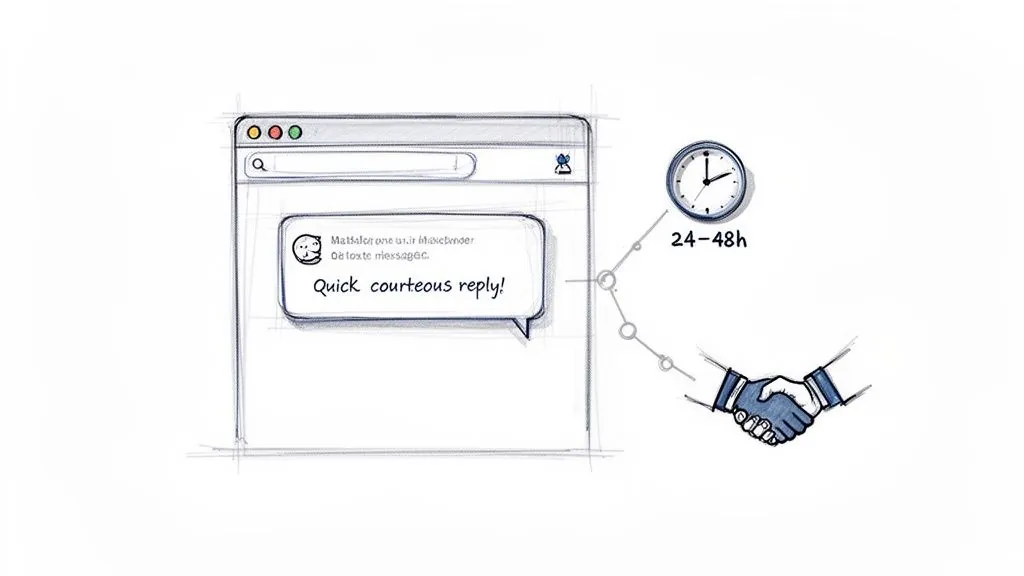
Ignoring a message can do more harm than good. Many recruiters and their firms use applicant tracking systems (ATS) where they can tag candidates as "unresponsive." Get that flag on your profile, and you might become invisible to them when the perfect role does come along. A quick, polite response prevents this and shows you're an organized professional who respects their time, a trait that always gets noticed.
Timing is Everything
If there's one golden rule, it's to be quick. That 24 to 48 hour window isn't just arbitrary etiquette; it directly impacts how you're perceived. In this fast paced hiring market, speed signals interest and professionalism.
Recent findings from a 2026 LinkedIn workforce study showed that 72% of recruiters give priority to candidates who respond quickly. A prompt reply can boost your chances of getting a callback by a staggering 30 to 50%, effectively turning a cold message into a warm conversation.
The table below breaks down how your response time can shape a recruiter's perception and influence your outcomes.
Recruiter Response Timing: The Impact of Your Reply Speed
This table illustrates how the speed of your response to a recruiter's message can directly affect your professional standing and potential opportunities.
| Response Timeframe | Recruiter Perception | Potential Outcome |
|---|---|---|
| Within 24 Hours | Highly engaged, professional, and interested. | Top of mind candidate. Increased likelihood of immediate follow up and consideration for this and future roles. |
| 24 to 48 Hours | Responsive and courteous. | Still a strong contender. You've shown respect for their time and kept the door open for a conversation. |
| 3 to 5 Days | Passive, potentially disorganized, or lukewarm. | Your window of opportunity may be closing as they've already engaged with faster responders. May be seen as a backup. |
| 1 Week or More | Disinterested or unprofessional. | Often too late. The role may be filled, or you may be flagged as unresponsive, hurting your chances for future contact. |
As you can see, a quick reply keeps you in the running, while a delay can inadvertently take you out of the game before it even starts.
A simple, two sentence 'no, thank you' is infinitely better than radio silence. It leaves a positive impression and keeps you on their radar for the next great opportunity they need to fill.
Turn Every Message Into a Career Asset
Start thinking of your LinkedIn inbox as a strategic tool for career growth, not just a mailbox for random inquiries. Every interaction is a chance to plant a seed for the future.
Even if you're turning down the role, a thoughtful response helps you:
- Build your personal brand: You’ll be remembered as a responsive and gracious professional.
- Grow your network: A positive exchange can turn a recruiter into a long term industry contact who shares insights and future leads.
- Keep future doors open: When a role that is a perfect fit for you lands on their desk, you'll be one of the first people they think of.
By making this a consistent habit, you're not just clearing your inbox. You're actively and intelligently managing your career path one message at a time.
Responding When You're Genuinely Interested
So, that dream job just landed in your LinkedIn DMs. This is your first audition. Think of your reply as more than just a simple "yes": it's your first real chance to stand out from the crowd of other candidates who probably got the exact same message. A well crafted, enthusiastic response can set a positive tone for the entire hiring process.
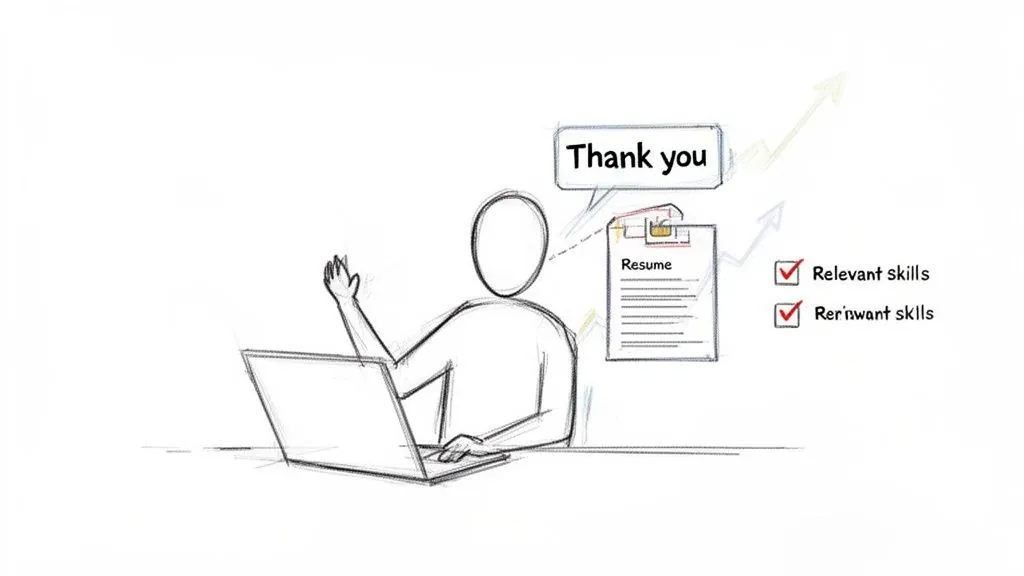
Your immediate goal is to show you're excited about the role while subtly proving you're the right person for it. Forget the generic, one line replies. Your message should thank the recruiter, confirm your interest, and, most importantly, connect your specific experience to what they're looking for.
Crafting the Perfect "Yes"
Always start by thanking the recruiter by name. It's a small touch, but it shows you're paying attention. From there, clearly state that you're interested in the role and the company.
Now for the most important part: drawing a direct line from your background to their needs. Don't just say you’re a good match; prove it. Cherry pick one or two key responsibilities from their message and briefly explain how your experience lines up perfectly.
Here’s an example of what that looks like in practice:
Thanks so much for reaching out about the Senior Product Manager role at InnovateCorp, [Recruiter's Name]. I’m definitely interested in learning more. The opportunity aligns perfectly with my background in scaling B2B SaaS products. You mentioned expanding into new international markets, which really caught my attention, I recently led a similar project that grew our market share in the EMEA region by 25%.
This does so much more than a simple "I'm interested." It instantly validates their outreach and gives the recruiter a concrete reason to champion you. You’ve just shifted from a passive name on a list to a proactive, high value candidate.
Taking the Next Steps
Once you've hooked them by showing your interest and relevance, make their job easy. Take the lead on setting up the next conversation.
Your reply should always include a few key things:
- A clear call to action: Suggest a brief call to dive deeper into the role.
- Your availability: Offer a couple of specific windows of time over the next few days.
- An updated resume: Attach it right to your message. Don't make them ask for it.
When you do this, you’re not just responding; you’re driving the process forward. It shows you’re organized, motivated, and serious. And once that initial call is set, knowing some perfect follow up strategies will keep you top of mind.
One last pro tip: end your message with a thoughtful question. This shows you're already thinking critically about the position. Ask about the team's biggest challenge for the upcoming year or what success looks like in the first 90 days. It frames you as a strategic partner, not just another applicant.
How to Say ‘No’ Without Closing the Door
Getting a LinkedIn message about a job that’s just not for you is a daily reality for many of us. It’s tempting to just hit 'archive' and move on, but how you handle that message is a bigger career move than you might think. Learning to say 'no' politely is just as crucial as knowing when to say 'yes.'
Think of it this way: a graceful decline isn't about shutting a door. It's about keeping it open for the right opportunity down the line. Recruiters have long memories and extensive networks. A thoughtful response keeps you on their good side and top of mind, while a blunt "not interested" or, worse, complete silence gets you forgotten.
What a Good 'No, Thanks' Looks Like
So, what’s the best way to turn down an offer without burning a bridge? It really comes down to a few key elements: showing appreciation, giving a brief and professional reason, and making it clear you want to stay in touch.
Always start by thanking them for reaching out. A simple, "Thanks for thinking of me for this" immediately sets a respectful tone and makes you stand out from the crowd who just ignore messages.
Then, you'll want to briefly explain why it's not a fit. You don't owe them your life story. Just keep it concise and frame it around your career goals, not any shortcomings of the role itself. This keeps things positive and professional.
Here are a few ways I’ve seen this done really well:
- "Right now, I'm really focused on growing my skills in [Specific Area], so this isn't quite aligned with where I'm headed."
- "The role sounds interesting, but I'm currently committed to a major project here that I’m excited to see through to the end."
- "I appreciate the outreach! My search is more focused on roles in [Different Function, e.g., 'strategic partnerships' rather than 'direct sales']."
This kind of clarity is actually a huge help to the recruiter. It gives them a much better idea of what you are interested in, so their next message might be for a job you actually want.
Turning Today's 'No' Into a Future 'Yes'
This last part is where the real magic happens. After you’ve politely declined, you need to pivot the conversation toward the future. This is what turns a simple rejection into a genuinely productive networking move.
Remember, a recruiter’s value isn't just the one job they offer today, but the dozens of opportunities they’ll have over the next year. Your goal is to be top of mind for the right one.
End your message by explicitly saying you want to stay connected. It shows you see them as a valuable part of your professional network, not just a one time messenger.
Here’s a simple template that ties it all together beautifully:
"Hi [Recruiter's Name],
Thank you so much for reaching out about the [Job Title] role. I really appreciate you thinking of me.
While this particular opportunity isn't the right fit for my current career goals, I would love to stay connected. Please feel free to reach out if any roles focused on [Your Ideal Area, e.g. 'enterprise level data analytics'] open up in the future.
Wishing you the best in your search for this position.
Best,
[Your Name]"
And that’s it. In just a few sentences, you’ve politely declined, given the recruiter useful context for the future, and strengthened a professional relationship. It's a small effort that can pay off big time down the road.
What If It's a "Maybe"? Responding When You're Not Actively Looking
So, a recruiter’s message lands in your inbox. It looks interesting, but you’re not really trying to leave your current job. What do you do?
This is a scenario I see all the time, and it’s a delicate one. You're curious, but you don't want to seem desperate or disloyal to your current employer. The way you handle this "maybe" can be a powerful career move if you play your cards right.
Think of your first response as an intelligence gathering mission. You need more details before you can even decide if it's worth a real conversation. The goal is to show you're interested enough to listen, but that the bar is high. This frames you as a discerning professional who is selective about their career, not someone just grabbing at any new opportunity.
Keep the Door Open, But Stay in Control
Replying to a recruiter when you're content in your role is a classic low risk, potentially high reward move. It costs you a few minutes of your time, but it could lead to your next big career step. The trick is to strike a balance between professional curiosity and satisfaction with your current position.
My advice? Don't jump straight to scheduling an interview. Your first objective is simple: get more information.
The easiest way to do this is to ask for the complete job description. It’s a simple request, but it does two important things at once. First, it shows you're taking the message seriously. Second, it gives you the concrete details you need to actually weigh the role against your own.
Here's a template I often suggest people adapt:
"Thanks for getting in touch, [Recruiter’s Name]. This sounds like an interesting role. While I'm quite happy at [Your Company], I’m always open to hearing about a compelling challenge. Would you be able to send over the detailed job description so I can take a closer look?"
This response is professional and polite, and it puts the ball right back in the recruiter's court. It sends a clear signal: you have high standards and won't be swayed by a vague pitch.
Suggest an "Exploratory" Chat
But what if the initial message or the job title is really intriguing? If it feels like a potential game changer, you might want to propose a brief, low commitment conversation.
I always recommend framing this as an "exploratory call" rather than a formal interview. That specific wording is key: it subtly manages expectations and lowers the pressure for both of you.
It's also a smart move to control the timing. Suggesting a call "sometime next week" or in "a week or two" reinforces that you’re busy and focused on your current work. You’re not just sitting by the phone waiting for their call. From a recruiter's perspective, this only makes you a more attractive candidate and strengthens your position down the line.
When you make the request, try to hit these points:
- Start with thanks. A simple "Thanks for reaching out" is always a good start.
- State your position clearly. Mention you’re not actively looking but are open to a brief chat.
- Propose a future time. Suggest a call next week to show you’re organized but not immediately available.
- Set the agenda. Make it clear you want to "learn more" about the role, the company culture, and the team.
This measured approach tells the recruiter you're a valuable professional who makes strategic career decisions. You're not looking for just any job: you're waiting for the right one.
Personalizing Your Reply to Stand Out
Recruiters are wading through a flood of messages every single day. If you want to get noticed, a generic, copy pasted response just won't cut it. A little personalization is the single best way to make a recruiter pause and actually read what you have to say.
Taking a moment to show you've done your homework proves you're a serious, engaged candidate.
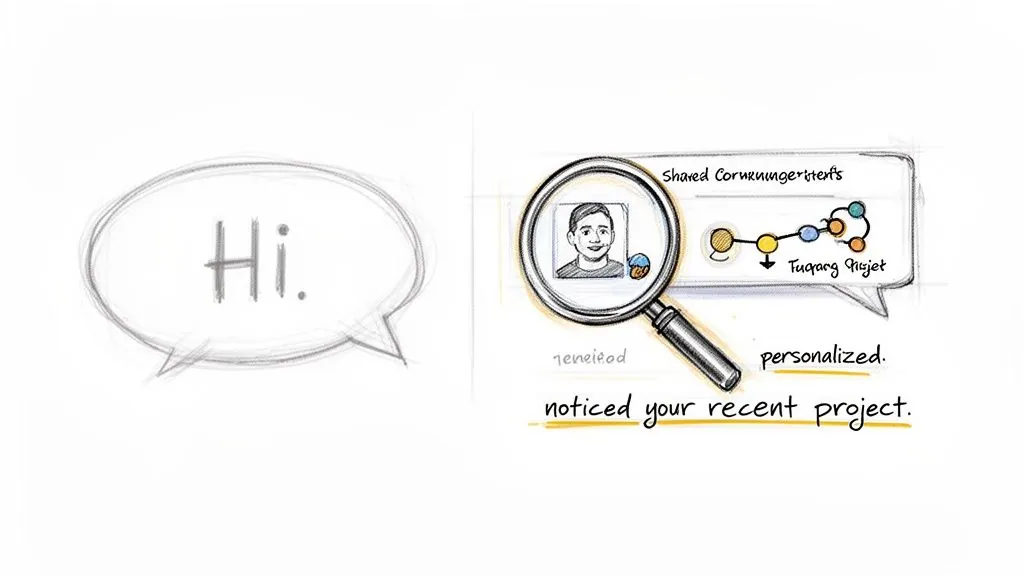
Think about it from their perspective: some recruiters get up to 200 messages daily. When your reply references something specific from their message or profile, it immediately stands apart. In fact, one study showed this simple act can increase your reply rate by a staggering 45%. It's a small effort with a massive payoff.
Go Deeper Than Just Their First Name
Everyone knows to start with "Hi [Recruiter's Name]." That's the bare minimum. To truly make an impression, you need to invest about two minutes of research before you hit reply. A quick scan of their LinkedIn profile or the company's page is all it takes.
Look for a genuine point of connection you can mention.
- Shared Connections: "I noticed we both know Jane Doe from my time at Acme Corp. She was a fantastic mentor."
- Recent Company News: "I saw that your company just launched a new AI ethics initiative. That's an area I'm incredibly passionate about and have followed closely."
- A Detail from Their Profile: "I read your recent post on the future of remote work and couldn't agree more with your take on asynchronous communication."
These small details transform a cold interaction into a warm conversation. You're no longer just another resume; you're a person who pays attention. For even more great ideas, check out these actionable message templates for hiring managers.
The Difference a Few Minutes Makes
Let's see this in action. Here’s how a little bit of research can completely change the tone and effectiveness of your reply.
The Generic (and Forgettable) Reply:
"Hi Jane, thanks for reaching out. I'm interested in the role. Here is my resume."
This is fine, but it’s forgettable. It immediately blends in with dozens of other low effort messages and puts all the work back on the recruiter to figure out why you're a good fit.
The Personalized (and Memorable) Reply:
"Hi Jane, thank you for reaching out about the Senior Marketing Manager role. I saw on your profile that you specialize in recruiting for tech startups, which is exactly the kind of environment where I thrive.
The role sounds exciting, especially the part about building a team from the ground up, I did something very similar in my last role at XYZ Company. I've attached my resume and would love to chat more."
See the difference? This response immediately shows you’re thoughtful and genuinely interested. It builds a real connection and dramatically increases your chances of moving forward. For more inspiration on crafting a profile that attracts these kinds of opportunities, take a look at these LinkedIn profile examples.
Show, Don’t Tell: The Power of Quantified Achievements
When a recruiter slides into your LinkedIn DMs, you have a split second to make an impression. Vague phrases like “improved team efficiency” or “strong project manager” are just noise. They’ve seen it a thousand times.
What really cuts through the static? Numbers.
Hard data is your best friend. It transforms a forgettable claim into undeniable proof of your value. Instead of just saying you helped on a project, you can say you “slashed project costs by 15% by automating our old workflow.” See the difference? One is a claim; the other is a result.
From Fluff to Tangible Impact
Learning to translate your work into data backed results is a skill that will fundamentally change your career trajectory. It’s what separates the good candidates from the ones who get hired.
Think about the real world consequences of your work. Did you save the company money? Did you find a way to make a process faster? Did you help bring in more customers or make existing ones happier? That's where you'll find your metrics.
Let’s look at how this plays out in a few different fields:
- Tech: Don't just say, "I write clean code." Instead, try: "I refactored our core application module, which cut server response time by 40% and led to 20% fewer bug reports."
- Marketing: "Managed social media" is weak. How about: "I launched a targeted ad campaign on a $5,000 budget that brought in 150+ MQLs and delivered a 3x return on ad spend in just one quarter."
- Sales: Anyone can say they "exceeded targets." What you want to say is: "I closed $1.2M in new enterprise business in FY2025, beating my quota by 120% and landing as the #1 rep on our team of 15."
This isn’t just a nice to have. We've seen that using specific metrics like "40% efficiency gains" or "2x customer acquisition" can boost your chances of landing an interview by as much as 60%. It’s a simple change that makes a massive difference in how recruiters perceive you, a point often emphasized in professional advice on recruiter responses.
Weave Your Wins into the Conversation
These powerful numbers shouldn't be buried in your resume. They are your star talking points. When you get that message from a recruiter, pick one of your best stats and work it right into your reply.
Doing this immediately shows you’re a results oriented professional and gives them a compelling reason to fast track you to the hiring manager.
When you lead with a number, you're not just telling them you're good at what you do: you're showing them the exact business impact you can deliver. That’s how you turn a simple LinkedIn message into a serious opportunity.
This approach is incredibly effective because it immediately connects your past successes to their company's future needs. Once you've got your key metrics down, you can start sprinkling them throughout your entire profile, which is a strategy we detail in our guide to crafting powerful LinkedIn summary examples.
Common Questions About Responding to Recruiters
Even with the best templates, you're bound to run into some tricky situations when dealing with recruiters on LinkedIn. Let's walk through a few of the most common questions and how you can handle them like a pro.
A big part of responding effectively is showing your value. It’s not just about listing skills; it’s about proving your impact with real numbers. This simple flowchart shows you how to translate a general skill into a powerful, data backed achievement that will catch a recruiter's eye.
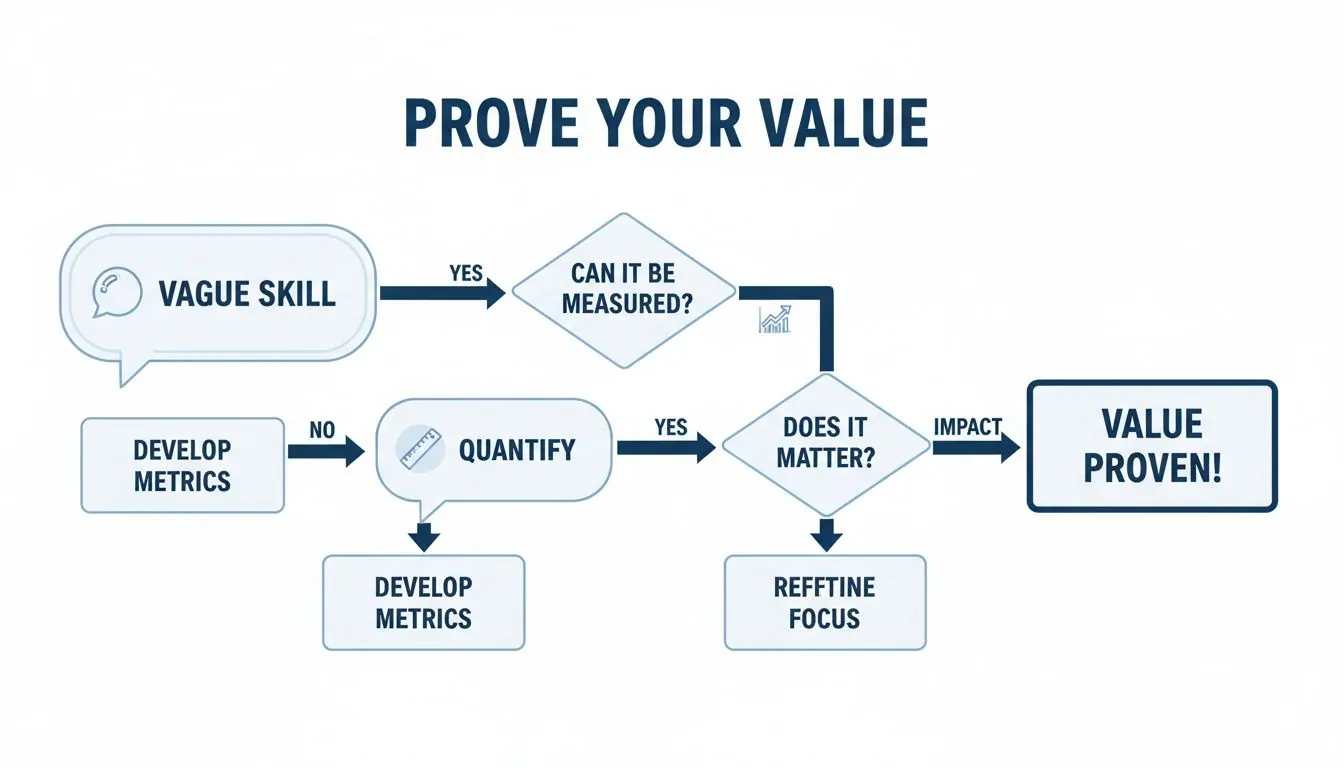
This process is all about moving from a vague claim to a specific result. When you quantify your accomplishments, you demonstrate real, tangible business impact.
How Can I Tell if a Recruiter Message Is a Scam?
Your inbox is valuable, so it pays to be skeptical. Keep an eye out for a few classic red flags that often point to a scam or a low effort phishing attempt.
Watch out for overly generic messages that use buzzwords like "exciting opportunity" but fail to mention the actual company or role. Vague job descriptions and recruiter profiles with hardly any connections or history are also major warning signs.
A legitimate recruiter will almost always be upfront with the role and the company they're hiring for. Before you reply, do a quick check. Look up the recruiter on LinkedIn and see if their profile lists them as an employee of the company they mentioned. You can even cross reference this on the company’s official LinkedIn page.
And a golden rule: never give out sensitive personal information like your home address or social security number in an initial message. For a deeper dive into protecting your privacy, check out our guide on whether LinkedIn messages are private.
What if They Ask for Salary Expectations Immediately?
Ah, the dreaded salary question right out of the gate. It's a common tactic, but you don't have to give a number before you're ready. The goal is to gracefully sidestep the question until you have more information about the job.
If you name a number too early, you could either price yourself out of the running or, worse, leave money on the table.
Politely pivot the conversation back to the role itself. You can say something like, "I'd love to learn more about the role's responsibilities first to ensure it's a great fit. From there, I'm confident we can agree on a competitive salary."
Another great strategy is to turn the question back to them. Simply ask, "What is the approved salary range for this position?" This puts the ball back in their court and helps you gather the information you need to negotiate effectively later on.
Should I Follow Up if I Don't Hear Back?
Yes, you absolutely should. A polite follow up shows you're professional and genuinely interested, and it keeps you from getting lost in a crowded inbox. Just be sure to give it some time.
Wait about a week before nudging them. This strikes the right balance between being proactive and being pushy.
A quick and simple message is all you need. Try this: "Hi [Recruiter's Name], just checking in on our conversation about the [Job Title] role. I remain very interested and look forward to hearing about any updates when you have a moment." This simple note is often all it takes to get the conversation moving again.
Ready to scale your professional engagement and never miss an opportunity? PowerIn helps you build your brand and attract leads by posting high quality, relevant comments on LinkedIn and X around the clock. Start your free trial today at PowerIn.