Most advice on how to get more followers on linkedin page starts with volume. Post more. Use hashtags. Show up daily. That’s incomplete.
The sharper way to think about growth is this. Follower quality matters more than follower count. Existing LinkedIn growth advice leans heavily toward posting frequency and visibility tactics, but it rarely shows you how to tell whether new followers are actually qualified buyers, partners, or candidates for your pipeline, as noted in this discussion of follower quality segmentation and business outcomes.
That gap matters most in B2B. A page with fewer but relevant followers can outperform a bigger page full of the wrong audience. If you run a startup, agency, consultancy, or sales led company, the right question isn’t “how do we get more followers?” It’s “how do we get more of the right followers, and turn that attention into leads?”
Build a Follow Worthy LinkedIn Page Foundation
A LinkedIn page doesn’t earn follows just because it exists. It earns follows when a visitor lands on it and quickly understands who it’s for, what it talks about, and why it’s worth adding to their feed.
That’s why I treat the page like a landing page, not a social placeholder. If your banner is vague, your description is generic, and your recent posts look random, you’re forcing visitors to guess. Most won’t.
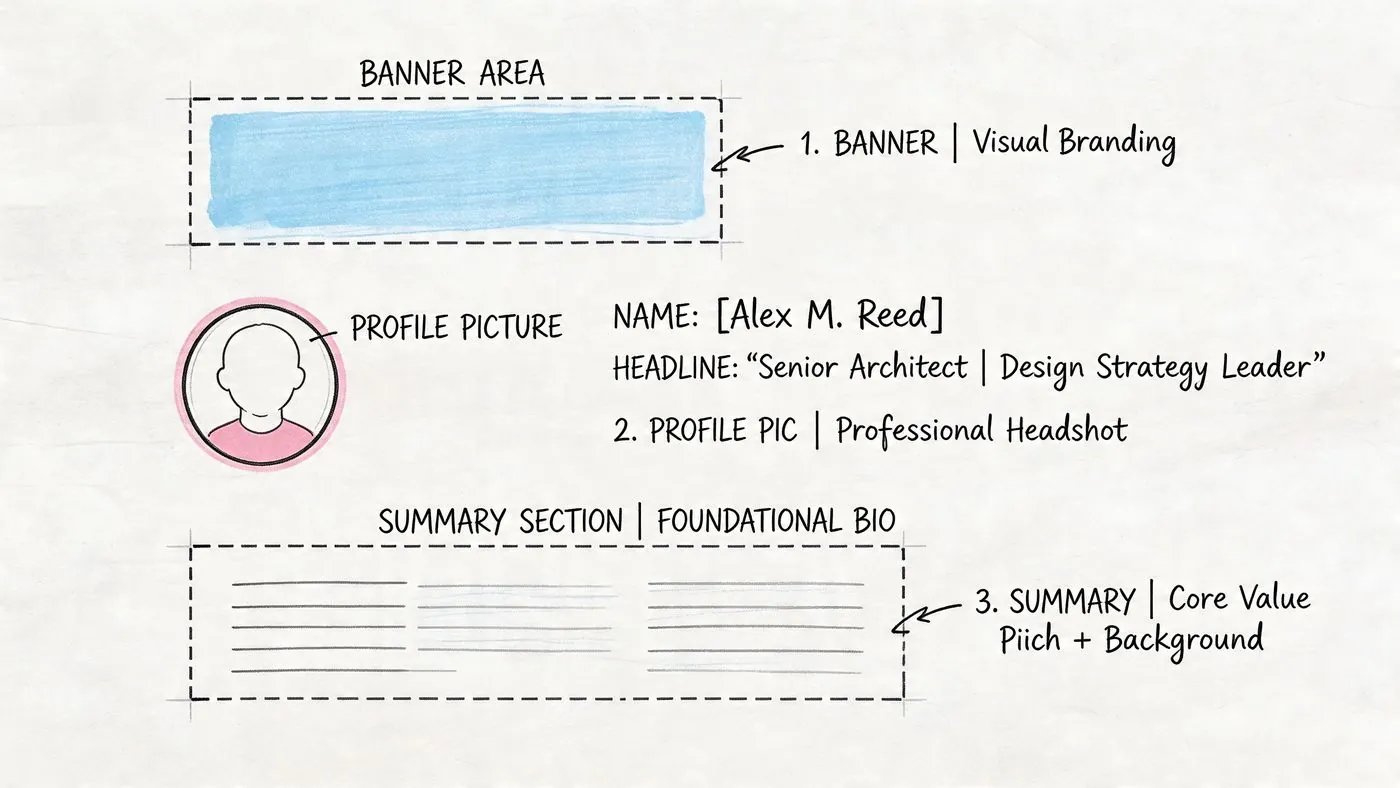
Make the page instantly legible
Start with the top of the page. A good banner doesn’t try to say everything. It says one clear thing your ideal follower cares about. Your tagline should support that same promise, using the language your market already uses.
Then fix the company description. Most pages waste this space on corporate filler. Write it for search and conversion:
- Lead with your ICP: Say who you help first.
- Name the problem: Be specific about the pain point you solve.
- State the value: Explain what people will learn from following your page.
- Use buyer language: Include terms your audience would search for on LinkedIn.
A simple audit question helps here. If a prospect from your target market landed on the page for ten seconds, would they know they’re in the right place?
Practical rule: If your page copy could belong to ten other companies in your category, it won’t convert profile visits into follows.
Build for trust before promotion
The page also needs proof of life. That means a consistent visual identity, a current logo, an active posting history, and a CTA that matches your business goal. If your page looks neglected, traffic from comments, employee shares, and ads won’t convert well.
A few practical fixes usually matter most:
- Custom URL and clean branding help the page look established.
- Recent posts pinned in the feed should reflect your core topics, not one off announcements.
- CTA alignment matters. If the page is for awareness, make the content worth following before pushing hard offers.
- Team presence helps. Employees who engage with the page create early trust signals for visitors.
If you want a broader framework for long term organic social media growth, it helps to think beyond publishing and focus on the entire conversion path from impression to follow to inquiry.
One underused move is to engage as the company page itself, especially when relevant conversations are happening around your niche. If you haven’t tested that workflow, this guide on commenting as a company page on LinkedIn is useful because it shows how the page can participate directly instead of sitting idle between posts.
What usually doesn’t work
A polished page still won’t grow if the foundation is built around vanity.
Avoid these traps:
- Generic mission statements: “We help businesses innovate” says nothing.
- Overdesigned banners with no message: Pretty isn’t persuasive.
- Inconsistent topic mix: Visitors can’t tell what they’ll get by following.
- Early hard selling: If every post pushes demos or calls, people won’t subscribe to more of it.
A follow worthy page makes one promise and keeps repeating it clearly.
Develop Your B2B Content Strategy and Cadence
Content is the engine. But not every post type attracts the right followers, and not every cadence is realistic enough to sustain.
For smaller pages, consistency still creates an edge. In 2025, LinkedIn company pages with 1K to 5K followers averaged 24.5% annual follower growth, while much larger pages grew more slowly. The same benchmark notes that smaller B2B pages can realistically target 5% to 10% monthly growth by posting 3 to 5 times weekly, and that native documents lead with 7% engagement, outperforming video for follower acquisition, according to SocialInsider’s LinkedIn benchmarks.
That tells you two things. First, you don’t need a giant audience to grow. Second, format choice matters.
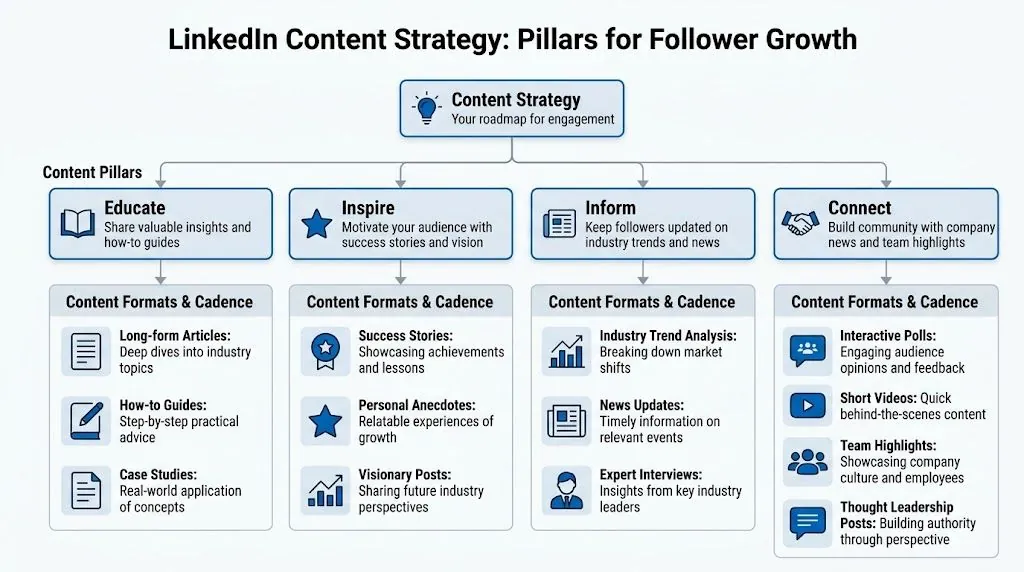
Use four content pillars
Most B2B pages get stuck because they post only updates about themselves. That creates short bursts of relevance and long periods of silence. A better system is to build around recurring pillars.
| Content pillar | What it does | Example angles |
|---|---|---|
| Educate | Earns trust through expertise | How to posts, frameworks, teardown posts |
| Inform | Makes the page useful to follow | Industry shifts, buyer behavior changes, market commentary |
| Inspire | Gives people a reason to care | Founder lessons, customer wins, strategic bets |
| Connect | Humanizes the brand | Team viewpoints, behind the scenes moments, hiring context |
This mix stops the feed from becoming repetitive. It also helps attract different segments of your market without drifting off topic.
A practical ratio works well here. Keep most posts value first, and use a smaller portion for direct promotion. B2B buyers will follow a page that teaches them something regularly. They won’t follow a page that treats every impression like a pitch.
Prioritize formats that earn follows
If the goal is follower growth, the feed has to reward attention quickly. Native documents often do that better than video because they let people scan, save, and share useful ideas inside LinkedIn.
Use formats with clear jobs:
- Native documents: Break down frameworks, checklists, or processes.
- Short text posts: Make one point sharply, then invite discussion.
- Polls: Good for market feedback, not for overuse.
- Customer insight posts: Focus on the lesson, not the logo wall.
- Opinion posts on news: Useful if you add interpretation, not just repost headlines.
A page becomes followable when people know what kind of useful thinking will keep showing up in their feed.
Build a cadence you can keep
A smart cadence is one your team can maintain without burning out or turning to filler. For most B2B pages, that means publishing consistently enough to stay visible, while leaving room for engagement and repurposing.
Many teams overcomplicate the calendar. You don’t need endless ideas. You need repeatable series. One weekly teardown. One document post. One opinion post. One customer insight. Run those consistently and improve the angles over time.
If you want a practical companion on content repurposing and distribution, this article on turning every piece of content into a growth opportunity is worth reviewing. It helps teams get more reach from the work they’re already doing.
For a broader strategic lens, this guide on how to master B2B marketing on LinkedIn is useful because it frames LinkedIn content as part of demand generation, not just social activity.
What to stop posting
Some posts create activity without attracting the right audience.
Common examples:
- Company announcements with no lesson attached
- Trend chasing takes outside your category
- Corporate milestone posts that matter only internally
- Thought leadership that says nothing concrete
If a post doesn’t help your ideal follower do their job better, think more clearly, or spot an opportunity, it probably won’t help you grow the page.
Drive Growth with High Value Contextual Engagement
Publishing alone is slower than often realized. The fastest way to get the right people to discover your page is to show up where their attention already is.
That’s why contextual commenting works. It puts your brand in active conversations instead of waiting for your own posts to earn reach.
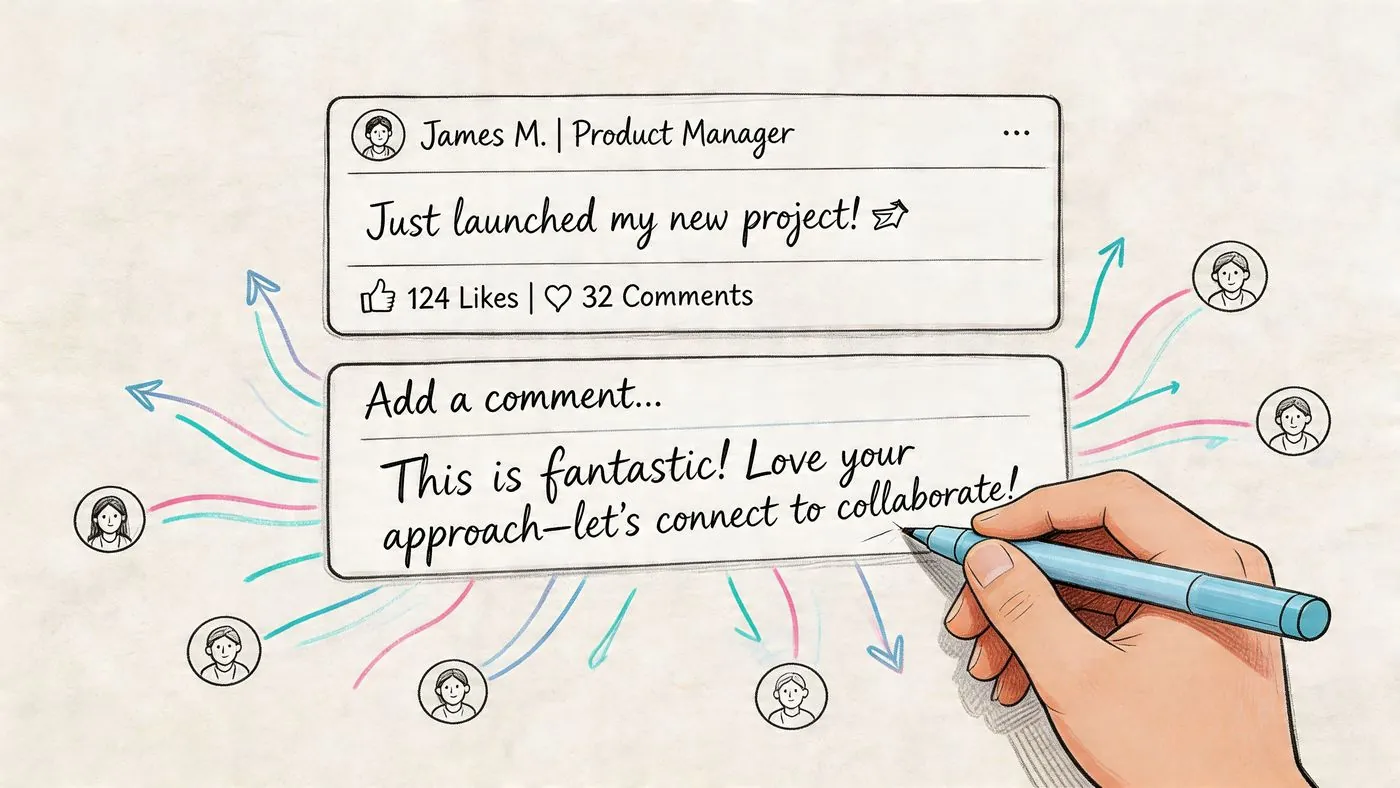
The benchmark worth paying attention to is this. The Comment to Connect approach can drive 20% to 30% follower growth per month when it’s executed well. The strongest version is simple but disciplined: comment on influential posts within 30 minutes, keep comments under 100 words, and add actual value. Generic responses like “Great post!” produce less than 1% profile clicks, while insightful comments drive 5x more curiosity clicks and can lift SSI by 10% to 15%, based on these LinkedIn follower growth benchmarks for contextual commenting.
What a valuable comment actually looks like
Many organizations misunderstand engagement. They think being active means leaving more comments. It doesn’t. It means leaving better comments.
A high value comment usually does one of four things:
- Adds a missing angle: Bring in a contrarian point the original post didn’t cover.
- Asks a sharp question: Not for the sake of asking, but to deepen the conversation.
- Shares a relevant observation: A concise field note from your market or sales process.
- Extends the idea: Show readers what the post means in practice.
Here’s the difference.
| Weak comment | Strong comment |
|---|---|
| “Great post, totally agree.” | “The timing point is right, but the bigger issue is message market match. Teams often optimize posting windows before they fix positioning.” |
| “Thanks for sharing.” | “Interesting take. Have you seen this work better for founder led pages than company pages? The trust dynamic seems different.” |
The second type earns clicks because it signals expertise. It also attracts the right clicks because only relevant people care about that nuance.
Build a daily engagement routine
This works best when it’s systematic, not random. A simple routine is enough:
- Identify a focused creator set in your niche.
- Monitor their new posts and relevant keyword conversations.
- Respond early while the post is still gaining traction.
- Route interested visitors to a page that clearly matches the conversation.
That last step is where page quality and engagement connect. If your comments are strong but your page is vague, curiosity dies on contact.
For teams that want to operationalize this without manually watching feeds all day, tools like PowerIn can monitor keywords and creators, then generate contextual comments that match the language of the post. Used carefully, that turns engagement into a repeatable workflow instead of an occasional tactic.
A quick walkthrough helps if you want to see this style in action:
What doesn’t work anymore
Low effort engagement is easy to spot. Buyers ignore it, creators ignore it, and LinkedIn users have seen too much of it already.
Avoid:
- Praise only comments that add nothing
- Copy paste phrasing across multiple posts
- Overly long comments that try to become their own article
- Commenting outside your lane just to chase reach
If you want high quality followers, comment where your buyers already pay attention, and say something they’d actually remember.
The biggest trade off here is time. Manual contextual engagement works, but it requires discipline. Still, for most B2B pages, this is one of the few tactics that improves visibility and audience quality at the same time.
Scale Your Follower Growth with Smart Amplification
Organic growth gets you signal. Amplification gets you scale. The two most practical levers are employee advocacy and paid follower ads, and they do different jobs.
Employee advocacy is the lower cost, trust heavy lever. Paid follower campaigns are the precision reach lever. Used together, they compound.
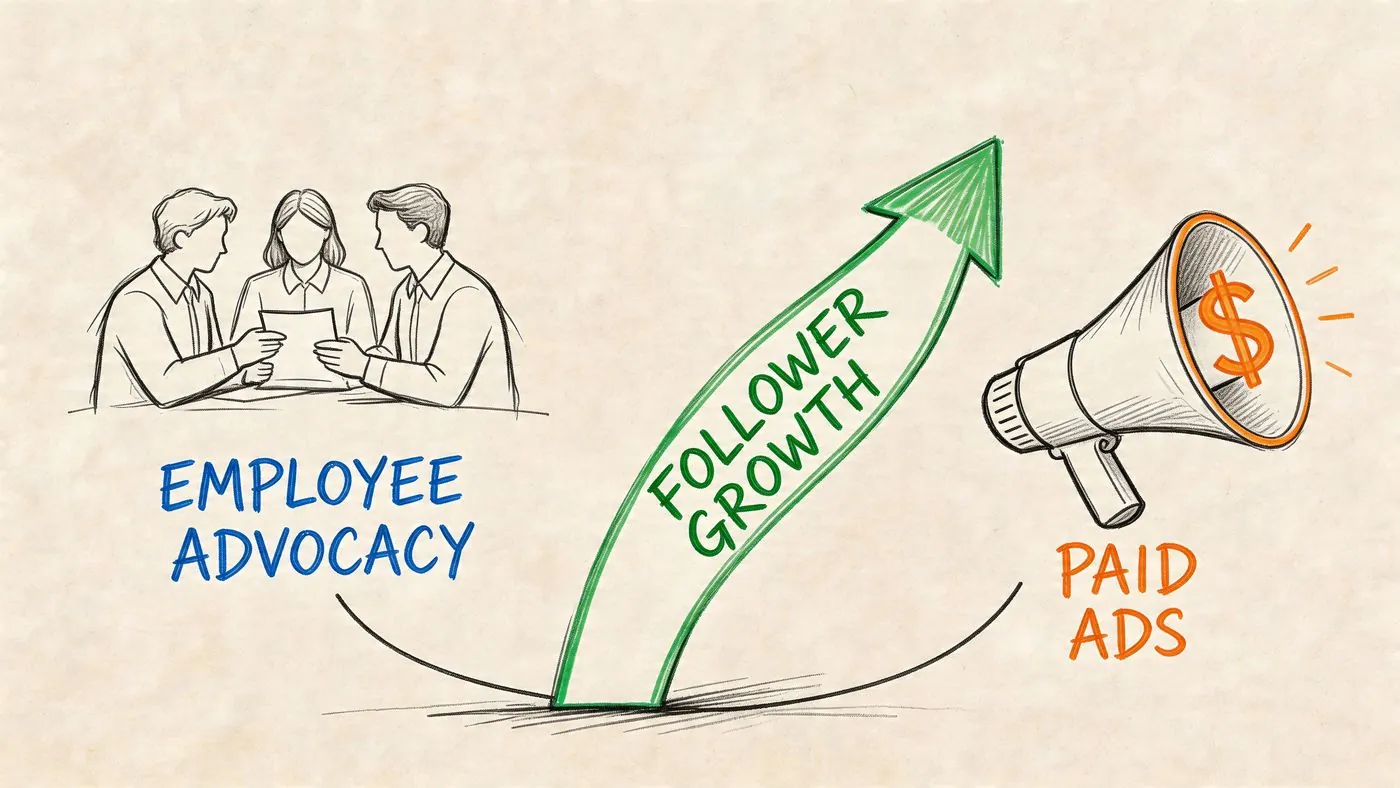
Employee advocacy for social proof
When employees follow, react to, and share page content, they expose it to warm professional networks that already trust them more than a brand. This is especially useful for new pages that need initial distribution.
The mistake is making advocacy feel like a corporate assignment. It works better when the team gets content that’s easy to engage with and relevant to their role.
A simple advocacy system looks like this:
- Pick a few anchor posts each month that the team can support.
- Give lightweight prompts instead of scripted copy.
- Encourage real comments over empty reactions.
- Use internal subject experts to add perspective in the thread.
That creates credibility. It also helps your page look active when new visitors arrive from ads or comments.
Follower ads for targeted reach
Follower ads are different. They let you reach people who don’t know you yet, but fit your market.
According to HyperClapper’s follower campaign benchmarks, LinkedIn follower campaigns in B2B typically convert at 0.5% to 2% from impressions, with a cost per follow of $0.50 to $1.50. When paired with organic engagement, pages can see 15% to 25% monthly follower growth. The same benchmark notes that keeping the audience under 500k can double efficiency, and retargeting profile visitors can raise follow back rate by over 30%.
That benchmark reveals an important lesson. Broad targeting wastes budget. If your campaign targets “marketing” in general, you’ll collect mixed audiences. If you target a narrow set of job titles, company sizes, skills, and regions that match your ICP, follower quality improves.
Which lever to use first
Use this rule of thumb:
| Situation | Better first move | Why |
|---|---|---|
| New page with no traction | Employee advocacy | Creates trust and early engagement |
| Strong content, weak reach | Follower ads | Adds volume to a message that already works |
| Good traffic, low follow conversion | Retargeting ads | Reengages visitors who already showed intent |
| Broad audience problem | Tighter ad targeting | Improves follower relevance |
The trade off is straightforward. Advocacy takes coordination. Ads take budget. Neither works well if the page and content are weak.
Measure Follower Quality and Business Impact
Follower count matters less than who followed, what they do next, and whether they resemble your ideal customer profile.
That’s the missing layer in most LinkedIn growth playbooks. They tell you how to increase visibility, but not how to judge whether visibility is attracting people who can become pipeline.
Track quality, not just quantity
LinkedIn Page Analytics gives you enough to build a simple operating view. Pair that with a spreadsheet or CRM notes, and you can spot whether your audience is getting better over time.
Here’s a practical scorecard:
| KPI | How to Measure | Why It Matters |
|---|---|---|
| Target follower fit | Review follower job titles, industries, seniority, and companies in Page Analytics | Tells you whether growth is attracting the right market |
| Post engagement quality | Look at who comments, not just how many reactions a post gets | Reveals whether content is resonating with potential buyers |
| Profile to website intent | Track clicks from your page and top posts to site pages | Shows whether followers move beyond passive consumption |
| Inbound conversation rate | Log DMs, contact form submissions, and sales conversations influenced by LinkedIn | Connects social growth to pipeline activity |
| Content by segment | Tag posts by topic and note which ones attract target accounts | Helps you publish more of what draws relevant followers |
| Impression efficiency | Compare reach with engagement and downstream actions | Helps you separate empty exposure from useful visibility |
If you need a cleaner definition of reach metrics, this breakdown of what an impression is on LinkedIn helps clarify why visibility alone can be misleading.
Use a simple review loop
A monthly review is often sufficient. Don’t just ask whether followers increased. Ask:
- Did more of the right job titles follow?
- Which content topics pulled in relevant engagement?
- Did contextual comments drive quality profile visits?
- Did follower growth correlate with conversations or site intent?
A useful LinkedIn page doesn’t just attract attention. It attracts recognizable buying signals from the people you want to reach.
The best pages treat follower growth like audience development, not a scoreboard.
Your 90 Day Follower Growth Action Plan
A good growth plan is boring in the right way. It removes guesswork and makes execution repeatable.
Days 1 through 30
Fix the page first. Tighten the banner, description, CTA, and recent post mix so the page is worth following. Then define three to four content pillars and build a realistic publishing rhythm your team can keep.
At this stage, focus on clarity over scale. If someone discovers the page tomorrow, they should immediately understand who it serves and why the content matters.
Days 31 through 60
Shift attention to engagement. Identify the creators, companies, and keyword themes that already attract your target audience. Start a daily contextual commenting routine around those conversations.
At the same time, review which posts earn the most relevant interaction. Keep the topics that pull in your ICP. Drop the ones that generate noise.
Days 61 through 90
Add amplification. Activate employee advocacy around your strongest posts and test follower ads only after the page and content are converting visitors credibly.
Use this final month to tighten measurement. Review follower fit, engagement quality, and business outcomes together. If growth is happening but the audience quality is weak, narrow your topics, targeting, or engagement focus.
This is how to get more followers on linkedin page without filling it with the wrong audience. Build the page to convert. Publish with a point of view. Engage where your buyers already pay attention. Then amplify what’s already working.
Frequently Asked Questions
How long does it take to grow a LinkedIn page?
It depends on page quality, consistency, niche focus, and how actively you engage outside your own posts. Most pages stall because they rely on publishing alone. Growth usually gets easier once the page has a clear positioning, a steady cadence, and active engagement around relevant conversations.
Should I focus on my personal profile or company page?
For many B2B brands, both matter, but they play different roles. Personal profiles often create trust faster. Company pages create a durable content hub, support team visibility, and give your brand a destination people can follow without tying everything to one person. If you can only improve one thing today, fix whichever asset currently gets more relevant traffic.
Is posting every day necessary?
No. Consistency matters more than forcing a daily schedule that produces weak content. A smaller number of useful posts, paired with strong contextual engagement, usually beats a high volume calendar full of filler.
Should I buy followers?
No, not if you care about lead quality. Bought followers distort your analytics, weaken engagement quality, and make it harder to tell whether your content is reaching the right market. You might make the number bigger, but you won’t make the page better.
What’s the biggest mistake most companies make?
They chase reach before they fix relevance. More impressions won’t solve a vague message, weak content strategy, or poor audience fit.
If you want to turn LinkedIn engagement into a repeatable follower and lead generation workflow, PowerIn helps teams monitor targeted conversations and publish contextual comments at scale. It’s a practical option for B2B founders, sales teams, and marketers who want more visibility from relevant discussions instead of relying only on their own posts.