You post something thoughtful on LinkedIn. Maybe it’s a lesson from a sales call, a strong opinion on your market, or a useful teardown of a campaign. A few coworkers like it. Then it dies.
That usually isn’t a content quality problem. It’s a system problem.
Most advice on how to get more followers and connections on linkedin is too shallow to be useful. It says to post more, comment more, and stay consistent. None of that is wrong. It’s just incomplete. Busy founders, sellers, consultants, and marketers don’t need another motivational speech. They need a repeatable operating model that builds visibility without turning LinkedIn into a second full time job.
The upside is worth taking seriously. LinkedIn reaches a large professional audience: 32% of U.S. adults use the platform, 25 34 year olds make up the largest global age segment at about 30%, LinkedIn has over 1 billion members worldwide, and it generates 80% of B2B leads according to Hootsuite’s LinkedIn demographics roundup. If your buyers, partners, candidates, or peers are professionals, they’re already there.
The playbook that works is simpler than imagined. Make your profile convert curiosity into trust. Publish on a cadence you can maintain. Use comments as your fastest path to visibility. Then scale the repetitive parts carefully, so you don’t burn out or look like a bot.
Beyond Random Acts of LinkedIn
The biggest mistake I see is treating LinkedIn activity like a collection of isolated tasks.
People write a post when inspiration hits. They send connection requests in batches when pipeline feels light. They comment for a few days, get busy, then disappear. Nothing compounds because nothing connects. The profile doesn’t support the content. The content doesn’t support the outreach. The outreach doesn’t feed a relationship building loop.
That’s why smart people end up feeling invisible on a platform with massive professional reach.
Practical rule: Stop asking, “How do I get more followers?” Start asking, “What system turns profile views into trust, trust into conversations, and conversations into a stronger network?”
A strong LinkedIn growth system has four moving parts:
A profile that earns the click
People discover you through comments, shares, tags, and search. If the profile looks vague or self centered, they leave.A content rhythm people can recognize
Sporadic posting trains your audience to ignore you. A steady rhythm gives them a reason to come back.A comment strategy tied to relevant creators
Your own posts aren’t your only distribution channel. Other people’s audiences are often the faster route.A scaling layer that removes repetitive work
Discovery, monitoring, and first draft comment suggestions can be systematized. Judgment and relationships still need a human.
This is also where a lot of B2B professionals get stuck. They copy creator advice built for people whose full time job is content. That model doesn’t hold up if you run a company, manage a quota, or handle clients all day.
Sustainable growth looks less exciting from the outside. It’s tighter. More boring. More deliberate. But it works because it survives your calendar.
Optimize Your Profile for Discovery and Trust
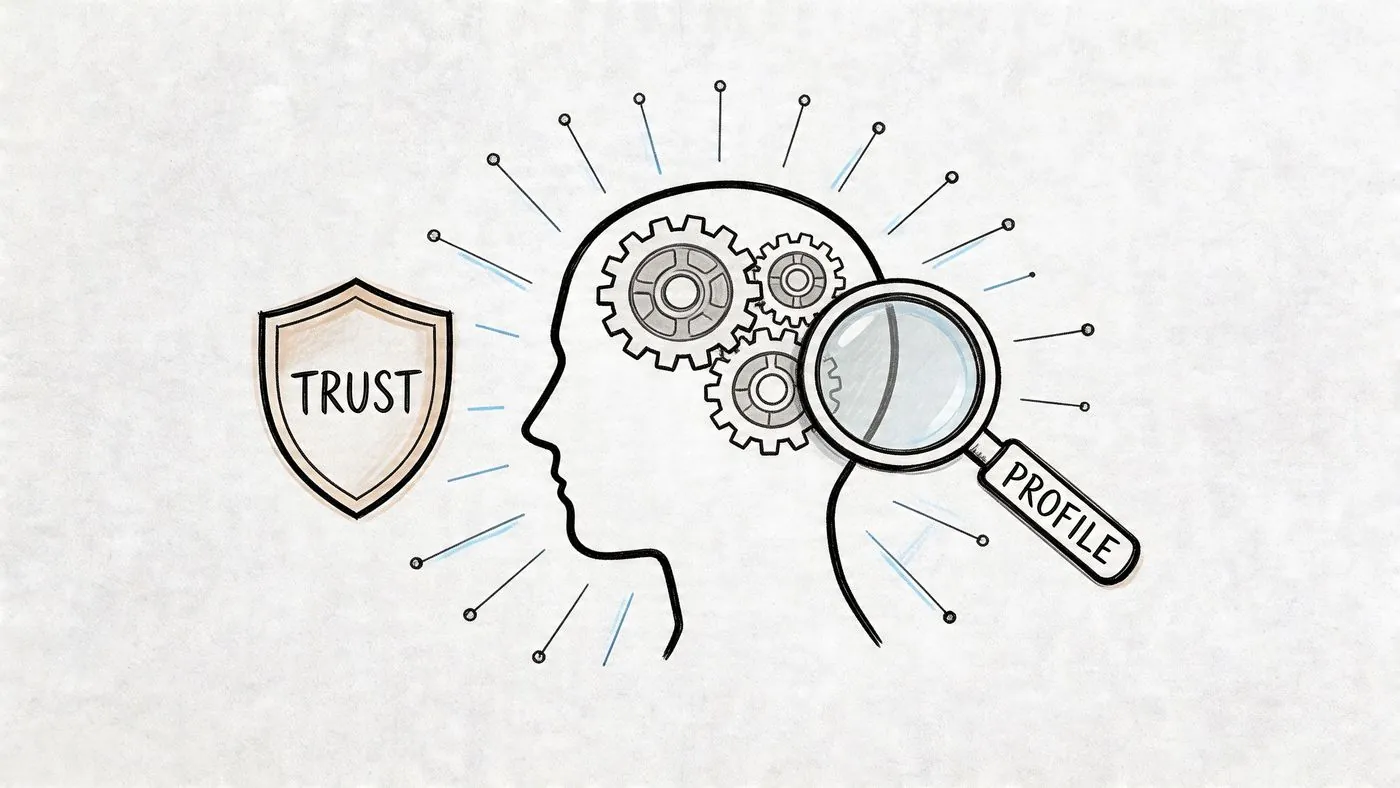
Your profile has one job after someone notices you. It needs to answer two questions fast: what do you help with, and why should anyone trust you?
If you’re serious about network growth, stop treating your profile like a digital résumé. It’s a landing page. People visit because a post or comment sparked interest. Your profile either converts that attention into a follow or connection, or it wastes it.
Fix the headline first
Most headlines are too literal. They describe a role, not a value proposition.
Weak version:
Account Executive at SaaS Company
Better version:
Helping B2B teams turn LinkedIn conversations into qualified pipeline
The second one does more work. It gives context, communicates an outcome, and includes language your buyers or peers might search for.
A practical headline formula:
- Who you help
- What result you help create
- How you approach it or what makes you distinct
For example:
- Helping founders build authority on LinkedIn through content and outbound systems
- I help B2B sales teams create more pipeline with better messaging and cleaner prospecting workflows
- Recruiter focused on technical hiring for early stage teams scaling fast
Make the top of the profile feel coherent
People judge trust in seconds. If your headshot is low quality, your banner is generic, and your headline is vague, they assume the same about your work.
Check these first:
Photo quality
Use a clear, current photo. It doesn’t need to be polished like a studio campaign, but it should look intentional.Banner relevance
A banner can reinforce your niche, offer, or point of view. Empty defaults waste prime real estate.Featured section
Don’t leave this random. Pin a strong post, a useful lead magnet, a client facing asset, or a case study style explanation of how you think.
If you want inspiration for structure and positioning, these LinkedIn profile examples are useful because they show what a profile looks like when it’s built to attract attention instead of just listing experience.
Rewrite the About section like a buyer facing intro
The About section fails when it reads like a career archive. It works when it makes the reader feel understood.
A simple structure works well:
- Start with the problem space you know well.
- Explain how you think about solving it.
- Back it up with relevant experience or proof.
- End with a clear reason to follow or connect.
Don’t write for recruiters, prospects, peers, and podcast hosts all at once. Pick the audience you most want to attract and optimize for them.
Here’s the shift:
Before:
“Experienced B2B marketer with a demonstrated history of working in software, demand generation, and brand strategy.”
After:
“Most B2B teams don’t have a traffic problem. They have an attention to trust problem. I help teams turn expertise into content, conversations, and demand on LinkedIn without relying on random posting.”
That’s more specific. It sounds like a person with a point of view.
If your broader goal is reputation, not just reach, this guide on how to build a personal brand on LinkedIn adds good strategic context. The profile is the foundation of that effort.
Develop a Content Cadence That Builds Authority
A lot of people think content grows your network because every post needs to go viral. That’s the wrong model.
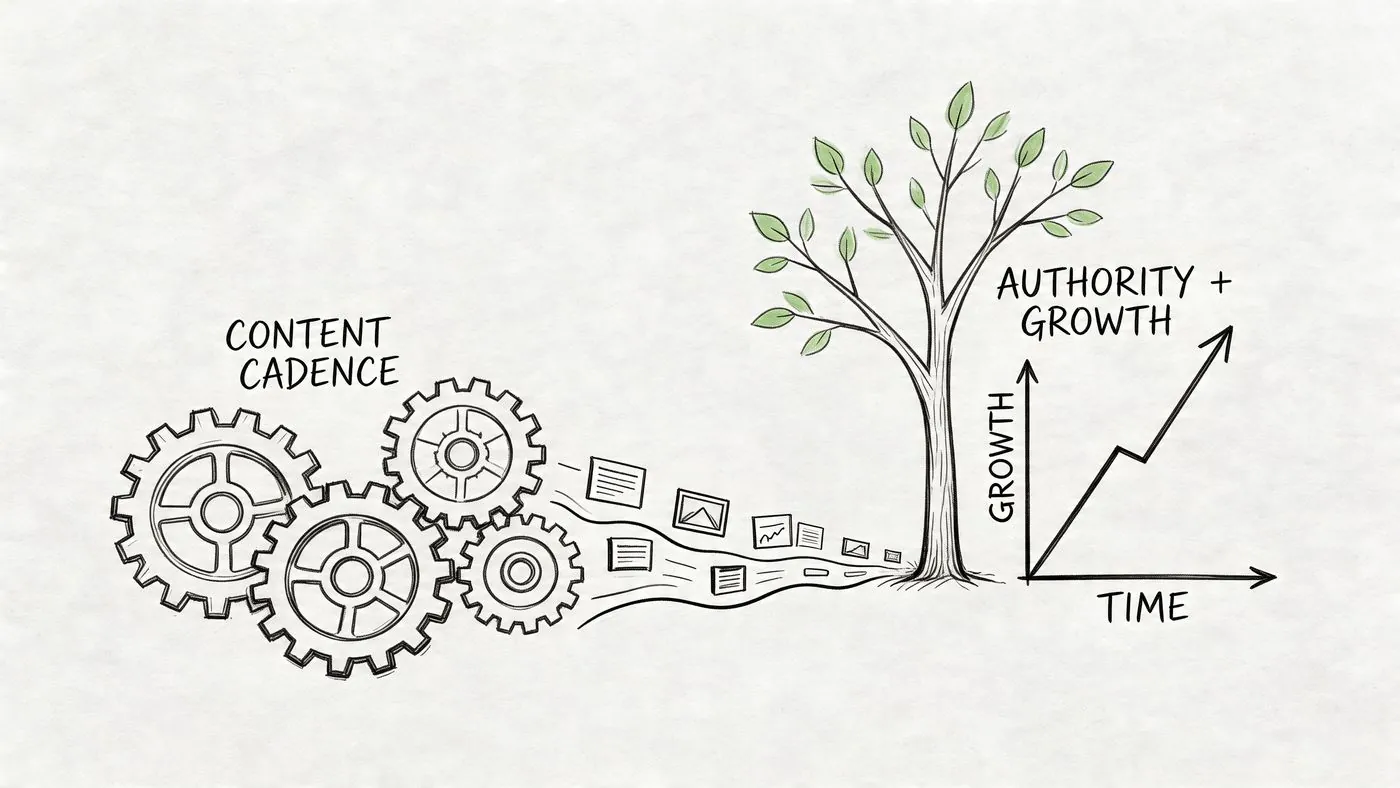
Content grows your network because repeated exposure builds familiarity. Familiarity makes people read your comments, click your profile, accept your connection request, and remember your name when they need help.
That only happens when your publishing cadence is stable enough for people and the algorithm to recognize you.
Treat your publishing schedule like a recurring show
One of the most useful ways to think about LinkedIn content is the “personal TV show” idea. Consistency matters because LinkedIn rewards predictable activity. According to this YouTube breakdown of LinkedIn growth tactics, publishing 3 times weekly at identical timestamps helps establish that cadence, and carousel posts with 5 to 7 slides can drive 40 to 60% higher follower acquisition than single image posts.
That doesn’t mean everyone needs to post three times a week forever. It means you need a rhythm you can sustain.
For most B2B professionals, a good content rhythm has these traits:
- It’s scheduled
You know which days you publish. - It’s narrow
You talk about a small set of themes repeatedly. - It’s reusable
One client call, one sales objection, or one failed experiment can become several posts. - It leaves room for engagement
If content consumes all your time, the system breaks.
Pick a few content pillars and stay inside them
Authority doesn’t come from range. It comes from relevance.
You should operate with three or four pillars. That’s enough variety to avoid sounding repetitive, but focused enough that your audience knows what you stand for.
A practical setup might look like this:
| Content pillar | What to post |
|---|---|
| Lessons from the field | Breakdowns from sales calls, client work, hiring, or product decisions |
| Point of view | Strong opinions about your market, common mistakes, trade offs |
| How to education | Tactical posts, frameworks, templates, checklists |
| Personal operating style | What you’ve changed in your workflow, leadership, or process and why |
Notice what’s missing. Generic inspiration. Random company updates with no takeaway. Broad commentary on topics outside your lane.
Use formats that match the idea
Not every idea deserves the same post format.
Text post
Best when you have a sharp opinion, a story, or a simple lesson. Strong for comments.Carousel
Best for frameworks, teardowns, step by step teaching, and swipeable summaries.Video
Best when tone matters, the topic needs nuance, or you want people to feel your communication style.
I’ve seen a lot of teams overcomplicate this. They build elaborate content calendars and stall. A simpler operating rhythm works better: document recurring conversations, turn them into teachable points, then publish them in the format that makes the point easiest to absorb.
For repurposing ideas without wasting effort, this article on turning every piece of content into a growth opportunity is a practical companion.
Keep the cadence realistic
The fastest way to fail on LinkedIn is to choose a schedule based on ambition instead of available time.
Try this instead:
- One anchor post
A deeper lesson, teardown, or opinion piece. - One practical post
A tip, checklist, or lesson from recent work. - One conversational post
A shorter post built to invite replies.
That mix is enough to build recognition without flooding your week.
If you can’t maintain the schedule for the next several weeks, it isn’t a strategy. It’s a burst.
One more thing matters. End some posts with a direct reason to follow. Not a desperate ask. A clear value proposition. If people know what they’ll keep getting from your feed, they’re more likely to subscribe to it.
Master the Comment First Engagement Strategy
Posting builds your home base. Commenting gets you discovered faster.
This is an aspect many individuals underuse. They spend hours crafting their own post, then leave a one line comment on someone else’s high traffic thread. That’s backwards. If your goal is followers and quality connections, comments are often your most effective action.
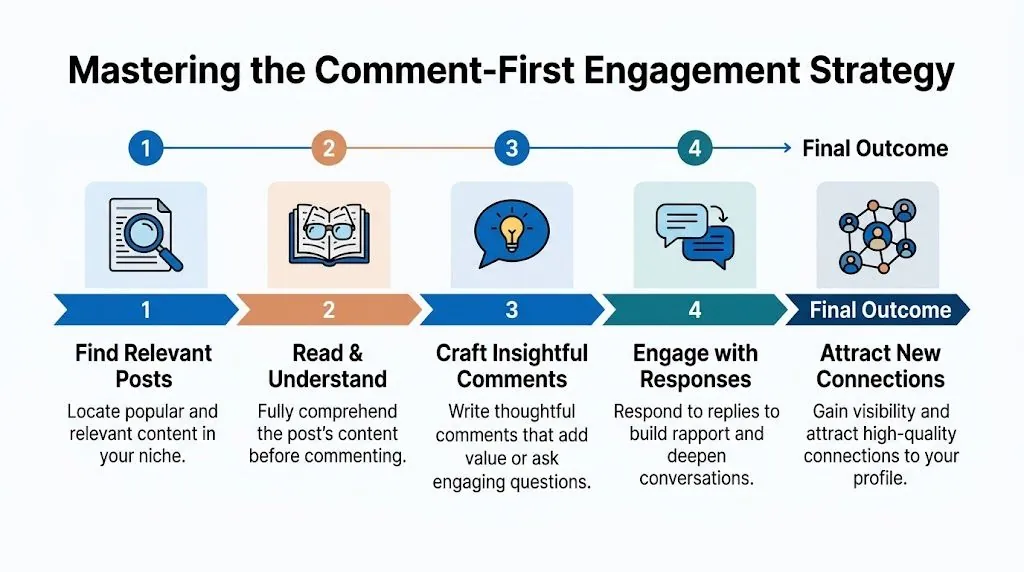
A useful benchmark comes from Creator Match’s guide to increasing LinkedIn followers. It notes that strategically commenting on high visibility posts from established creators can generate 30+ qualified connections from a single post when you comment within the first 2 hours. It also notes that specific, insightful comments get 60 to 70% more engagement than generic ones.
What weak comments look like
Let’s say a respected founder in your niche posts about why their outbound team changed messaging after poor reply quality.
A weak comment says:
“Great post. Completely agree.”
That contributes nothing. It signals attendance, not expertise. Nobody clicks your profile because you typed what dozens of other people typed.
Another weak version:
“Thanks for sharing. We’ve seen the same thing.”
Slightly better, still forgettable.
What strong comments do differently
A better comment sounds like this:
“We saw a similar issue when reps led with pain too early. Replies improved when the first message reacted to a trigger instead of forcing a diagnosis. The hard part wasn’t copywriting. It was getting the team to stop using the same opener for every account. Curious if your team changed messaging only, or targeting too?”
That works for a few reasons:
- It adds a specific observation.
- It introduces a nuance the original post didn’t fully unpack.
- It invites a real response.
- It makes you look like a practitioner, not an audience member.
Good comments don’t summarize the post. They extend it.
How to find the right posts
The easiest wins usually come from creators in your niche who already attract relevant discussion.
Look for posts that have strong engagement and a comment section full of people you’d want in your network. High traffic threads from irrelevant creators can inflate vanity metrics and bring the wrong audience.
A practical filter:
- Relevant creator
Their audience overlaps with your buyers, peers, or hiring targets. - Discussion density
The post has enough active comments to create discovery. - Recency
You can still enter while the thread is alive. - Substance
The topic gives you room to add a real point of view.
This broader guide on how to improve social media engagement is useful if you want more ideas on writing comments and posts that trigger discussion.
Here’s a deeper walkthrough on the mechanics of how commenting on LinkedIn boosts visibility, especially if you want to turn comments into profile visits and replies.
A quick video helps if you want to see the dynamic in practice:
Turn comment momentum into connections
The comment is the opener, not the finish line.
When someone replies thoughtfully, that’s often a strong signal for a connection request. The request doesn’t need to be clever. It needs to be contextual. Mention the discussion. Keep it short. Make it feel like a continuation, not a pitch.
For example:
- Enjoyed your take on that thread. Worth connecting.
- Good exchange on the pricing discussion. Sending a request.
- Liked your point about hiring trade offs in the comments. Let’s connect.
That sequence matters. Public interaction first. Private connection second.
A lot of people reverse it. They send cold requests, then hope familiarity appears later. The comment first route builds familiarity before the ask, which is why it feels more natural and usually performs better.
Scale Your Outreach with Responsible Automation
Manual engagement works. It also hits a wall fast.
If you’re trying to comment on relevant posts consistently while running a company, carrying a quota, or serving clients, you’ll eventually miss windows that matter. The issue isn’t discipline. It’s bandwidth.
That’s why automation can be useful, but only if you use it like infrastructure instead of a shortcut.
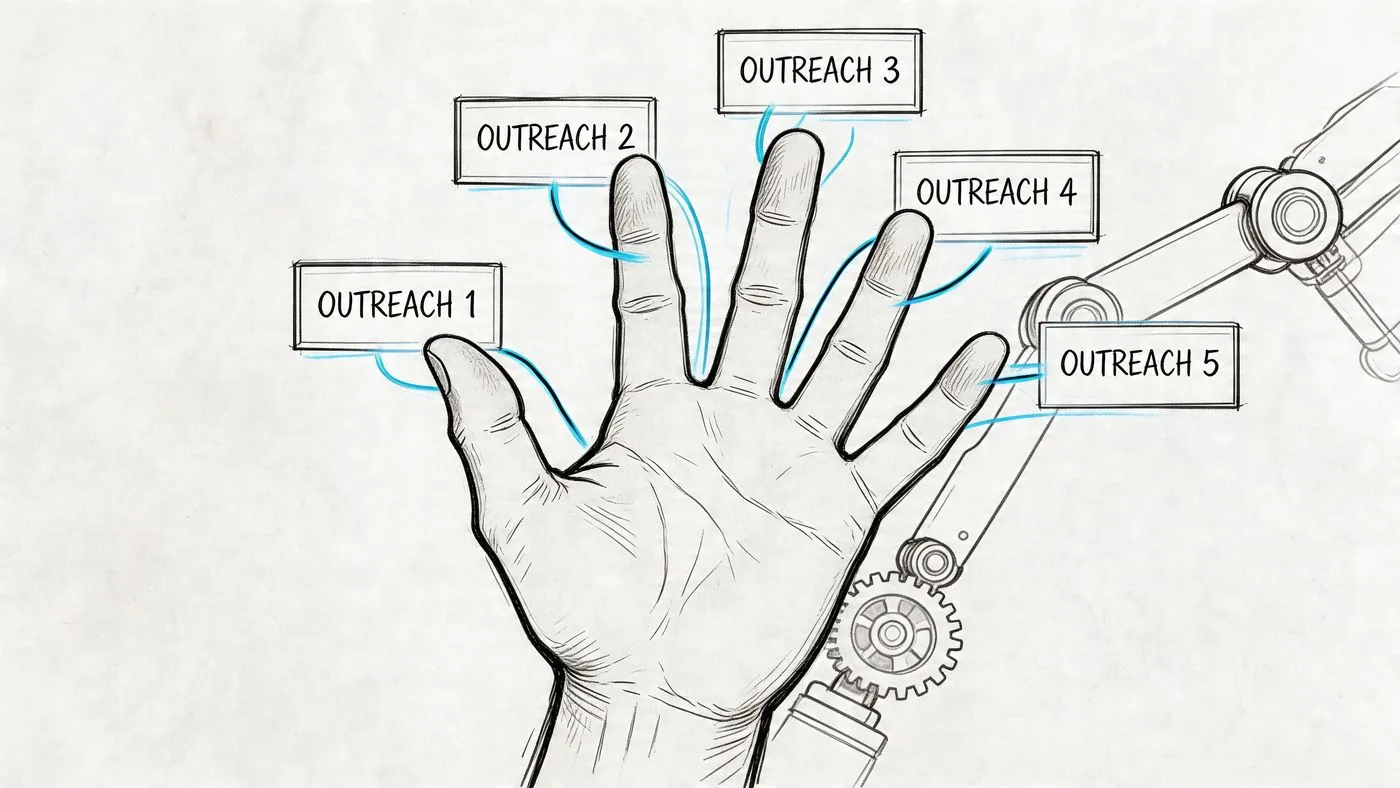
The trade off is real. According to this discussion of LinkedIn networking automation, a 2025 LinkedIn algorithm update penalized spammy automated comments by 40% in visibility, while 70% of B2B founders reported manual engagement was too time consuming. The same source says safe automation using Boolean keyword targeting and 30 minute response times has been shown to triple profile visits and produce 500+ quality connections monthly without bans.
What risky automation looks like
Bad automation is easy to spot:
- Generic comments that could fit any post
- No topical targeting
- Activity at odd hours that doesn’t match your market
- Zero review step before publishing
- Obvious volume with no conversation quality
That approach doesn’t just look sloppy. It trains people to ignore you.
What responsible automation looks like
Good automation narrows the scope and keeps a human in control.
A safe setup usually includes:
Keyword and creator targeting
Track specific topics, phrases, or people that match your market.Manual approval
Review suggested comments before they publish, especially early on.Timezone alignment
Keep activity inside normal business hours for your audience.Language matching
If you work across markets, comments should match the language of the post.Conversation follow through
Automation can help you show up. It shouldn’t replace actual replies once people engage.
Use automation for discovery and drafting. Keep judgment, nuance, and relationship building human.
One option in this category is PowerIn, which monitors targeted keywords and creators, drafts contextual comments, supports manual approval, and lets users align activity with timezone and language preferences. That kind of setup is useful when the problem is consistency, not a lack of ideas.
The biggest mistake is treating automation as permission to disengage from thinking. If your comment quality drops, the system stops working. The best use of tools is to remove repetitive scanning and help you respond while a conversation is still fresh. You still need to know what your audience cares about, what your point of view is, and when a reply deserves a real human response.
Measure Your Growth and Refine Your Playbook
If your only scoreboard is follower count, you’ll make bad decisions.
Follower growth matters, but it’s a lagging indicator. It tells you whether your system is broadly moving in the right direction. It doesn’t tell you which part is responsible. That’s why the right way to manage LinkedIn is like an operator, not a creator chasing vanity.
A useful benchmark comes from Postdrips’ analysis of LinkedIn follower growth in 2025. It says a normal follower growth rate is 2 to 5% per month, while smaller accounts under 5,000 followers can achieve 8 to 15% monthly with a consistent strategy. It also notes that posting weekly delivers 5.6 times more followers than posting monthly.
Track the metrics that explain the result
Use a simple monthly review. Don’t overcomplicate it.
Here’s a practical scorecard:
| KPI | What It Measures | Healthy Benchmark (Monthly) | How to Track |
|---|---|---|---|
| Follower growth rate | Whether your content and engagement system is attracting new audience | 2 to 5% is normal overall. 8 to 15% can be exceptional for accounts under 5,000 followers | Compare starting and ending follower count each month |
| Profile views trend | Whether comments, posts, and interactions are creating curiosity | Healthy means trending upward over time, not flat after bursts | Review LinkedIn profile analytics monthly |
| Connection acceptance quality | Whether your requests are relevant and contextual | Healthy means requests are accepted often enough to justify the effort | Track sent requests versus accepted requests in a spreadsheet |
| Comments that start conversations | Whether your engagement creates replies, not just impressions | Healthy means more threads are turning into exchanges with peers or prospects | Review which comments got replies and profile visits |
| Posting consistency | Whether you’re executing the cadence you planned | Healthy means you kept the schedule you committed to | Compare planned posts to published posts |
Use the data to diagnose, not just report
If follower growth is low but profile views are rising, your content or profile may be the bottleneck. People are noticing you, but not converting.
If posts perform modestly but your comments generate replies and connection requests, lean harder into comment first distribution. If connection acceptance is weak, your requests may be too cold, too generic, or sent before enough public interaction.
That’s the point of measurement. It helps you identify the weak link in the chain instead of guessing.
Review LinkedIn monthly, not emotionally. Single posts are noisy. Patterns tell the truth.
A stable growth system almost always looks less dramatic than people expect. It’s a loop: publish on schedule, comment where your audience already gathers, follow up with context, review what created profile visits and connections, then tighten the process.
If you want a way to scale that loop without turning LinkedIn into a daily manual grind, PowerIn can help. It’s built for monitoring relevant creators and keywords, generating contextual comment drafts, and keeping engagement aligned with business hours and approval controls. That makes it useful for founders, sales teams, consultants, and marketers who want consistent visibility while keeping the interaction quality high.